 Melissa's Botanicals
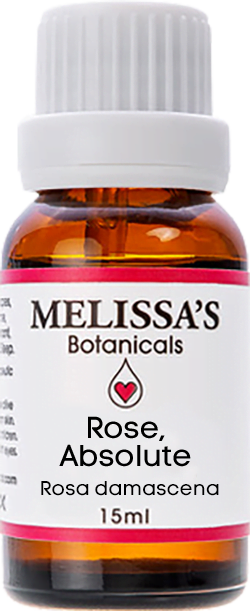

Rose, Absolute
Rosa damascena
About
Rosa damascena (Bulgarian) Absolute – Absolue de Rose de Damas
Botanical
Family: Rosaceae
Botanical Name: Rosa damascena Mill.
Common Names: Damask Rose, Rose of Damascus
Plant Description
Rosa damascena is a perennial shrub with highly scented, pink to deep-rose flowers. It is cultivated primarily for its intensely fragrant blossoms used in perfumery and therapeutic extractions.
Extraction
Method: Solvent extraction → Absolue
Plant Part: Fresh flowers (petals)
Yield: Very low, often <0.02% w/w of fresh petals
Organoleptic Profile: Rich, deep floral aroma with warm, honeyed, slightly fruity, and complex undertones; more “rounded” and less green than the corresponding essential oil.
Chemistry & Key Constituents
The absolute’s profile differs from the steam-distilled essential oil, with higher proportions of non-volatile and semi-volatile aromatic constituents including:
-
Phenylethyl alcohol (major contributor to rose aroma)
-
Geraniol, Nerol, Citronellol (monoterpene alcohols)
-
β-Damascone, β-Ionone (odorants with floral/rose facets)
-
Benzyl alcohol & Benzoates (aromatic esters)
Unlike distillates, absolutes carry heavier, less volatile aromatic molecules that deepen fragrance complexity and produce distinct therapeutic nuances.
Energetics (Aromatherapie Française)
-
Temperament: Calming, harmonizing
-
Trophic Actions:
-
Nervous system regulation
-
Emotional balance support
-
Skin trophicity (with carrier)
-
Therapeutic Actions
Primary French Aromatherapy Actions:
-
Nervous System: Calms emotional tension; supports relaxation in states of stress, agitation, or emotional overwhelm.
-
Psychotonic: Provides grounding and soothing influence; often used for grief, heartbreak, or anxiety-linked tension.
-
Cutaneous Trophic Support: Enhances skin comfort; supports hydration and soothing when properly diluted.
-
Endocrine Balance (Adjunct): Traditionally considered reassuring in hormonal fluctuation contexts (amenorrhea, premenstrual tension) when integrated into a complete protocol.
Clinical Indications
This absolute may be indicated in French medical aromatherapy as an adjunct supportive agent (never as a standalone pharmaceutical alternative) for:
-
Stress-related dysregulation (nervous agitation, irritability)
-
Emotional exhaustion / grief responses
-
Sleep onset difficulty related to emotional tension
-
Skin dryness or irritation when blended appropriately
Important: Absolutes are not used as first-line antimicrobials or for deep dermatologic pathology; they serve primarily supportive, neurosensory, and skin trophicity roles.
Uses
For the following uses, see our Directions and videos here https://melissasbotanicals.com/usage-guide/ Bath – Diffuser – Inhalation -Massage – Perfume – Neat or !Dilution
Safety Profile
General Precautions
-
Use only in diluted form (typically ≤10 in blends, creams, or inhalation matrices).
-
Irritation/Sensitization: Possible in sensitive individuals; perform patch testing.
-
Pregnancy & Lactation: Use with caution; recommended only under professional aromatherapy guidance.
-
Pediatric Use: Lower dilutions; professional consultation advised.
Contraindications
-
Known hypersensitivity to rosaceous extracts
-
Active dermatitis or compromised skin barrier without clinician oversight
Dosage & Methods
Topical (adult):
-
0.5-20% in carrier (e.g., jojoba, hazelnut, apricot kernel) for stress-balancing blends
-
0.5-30% in facial serums for trophic support
Inhalation / Diffusion:
-
1–2 drops in personal inhaler or appropriate diffuser for emotional regulation
Blending Notes:
Pairs exceptionally well with calming bases (e.g., lavender, chamomile), grounding resins (e.g., frankincense, Sandalwood, Myrrh), and gentle citrus top notes (e.g., mandarin, neroli) for rounded emotional support blends.
Mechanisms (Evidence-Informed)
While clinical trials specifically on rose absolute are limited, relevant pharmacology suggests:
-
Aromatic: Volatile aroma molecules like phenylethyl alcohol interact with olfactory receptors.
-
Sedative and anxiolytic signals: Preclinical data on rose derivatives indicate potential to modulate stress biomarkers and subjective tension.
-
Cutaneous comfort modulation: Lipophilic aromatic esters may contribute to barrier-friendly topical comfort.
Quality & Adulteration Markers
A high-quality Rosa damascena absolute should exhibit:
-
True deep floral complexity without synthetic sweetness or alcohol sharpness
-
GC/MS signature consistent with Rosaceae marker profiles
-
Absence of diluents (e.g., isopropyl myristate, carrier oil)
-
Stable aroma over time (no rapid deterioration)
Storage
-
Dark glass, tightly closed
-
Cool, consistent temperature (avoid heat/light)
-
Shelf life: generally 3-9 years if stored correctly(some last lifetimes.)