 Melissa's Botanicals
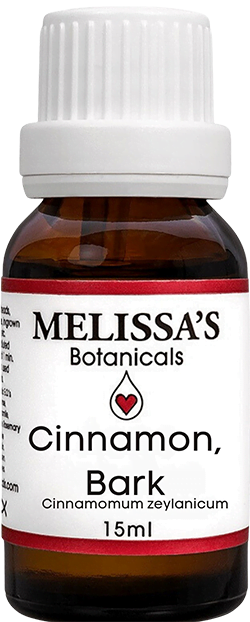

Cinnamon, Bark, Ceylon
Cinnamomum verum
About
Ceylon Cinnamon Bark
Genus and Species: Cinnamomum verum or the synonym
Cinnamomum zeylanicum
Family: Lauraceae
Part distilled: Bark
Extraction: Steam distillation
Aroma: Warm, sweet, spicy, and woody
Also known as: Cinnamomum zeylanicum
Ceylon cinnamon bark has a rich, familiar fragrance with a long history in herbal practice. Traditionally valued for its warming character and digestive applications, its essential oil is highly concentrated. A small amount brings considerable aromatic strength to a carefully prepared formula.
The Plant and Its Essential Oil
Ceylon cinnamon, also called true cinnamon, comes from Cinnamomum verum, an evergreen tree native to Sri Lanka. Steam distillation of its bark produces a pale yellow to amber essential oil with the characteristic sweet, spicy aroma of cinnamon.
The botanical species and the part distilled matter. Cinnamon bark and cinnamon leaf come from the same tree, but produce oils with different chemistry and fragrance. Bark oil is rich in cinnamaldehyde, the constituent responsible for its recognizable cinnamon character. Leaf oil is usually rich in eugenol, which gives it a more clove-like scent. They are distinct ingredients and should not be substituted or confused.
Traditional Digestive Support
Cinnamon bark has been used for generations as a warming digestive aromatic. In European herbal practice, cinnamon bark essential oil has a recognized traditional use for mild digestive discomfort involving spasms, bloating, and gas, used as a carminative.
This recognition applies to appropriately prepared medicinal products and is based on longstanding use. Because the essential oil is concentrated and can irritate the mouth and digestive tract, internal use requires a dilution of 10% in a carrier oil or 10 drops of Lavender to 1 drop Cinnamon Bark.
What Research Shows
Cinnamon bark oil and its principal constituent, cinnamaldehyde, have been studied for their antibacterial and antifungal activity. Laboratory research includes investigations of Candida and the protective communities of microorganisms known as biofilms.
A small clinical trial also found improvement in oral candidiasis with a specially formulated cinnamon essential oil mouthwash and spray. These findings are promising, but they apply to the preparation studied. They do not establish that cinnamon oil used at home will safely treat an infection.
In French Medical Aromatherapy
Cinnamon bark holds a place among the powerful warming aromatics used in French medical aromatherapy. Traditional teaching emphasizes its antimicrobial character and the importance of careful formulation.
Its use is dosage dependent. Concentration, method of application, duration, and the individual are all taken into consideration by the practitioner. The warmth of its fragrance should never be mistaken for gentleness on the skin.
Precautions
Cinnamon bark is a potent essential oil that can cause irritation and allergic skin reactions.
- Do not apply undiluted. Use only in a properly formulated preparation.
- Avoid damaged skin.
- Avoid if you have Low Blood Pressure or take medications for diabetes.
- Avoid contact with eyes and direct application to the mouth or other sensitive tissues.
- Discontinue use if irritation occurs.
- Medicinal use is not recommended during pregnancy, breastfeeding, or for children and adolescents under 18.
- Avoid use with a known cinnamon allergy; sensitivity to Peru balsam also warrants caution.
Follow the directions supplied with the finished product. Seek professional guidance before using cinnamon bark essential oil internally.
Practical Applications
0Ingredients & Sourcing
100% Pure therapeutic Cinnamon Bark from Sri Lanka
Botanical name: Cinnamomum verum, Ceylon
Source: SA Plantes Aromatics du Diois (SAPAD) 100% organic Located in Provence, France
All Melissa’s Botanicals products are GRAS – Generally regarded as safe.
- Lower Coumarin: Ceylon cinnamon (Cinnamomum verum) contains very low levels of coumarin, a natural compound that can cause liver damage or other health issues if consumed in large amounts or as a daily supplement. Cassia cinnamon has much higher coumarin levels.
- Flavor Profile: Ceylon is prized as “true cinnamon” for its delicate, sweet and spicy flavor.
- Texture: Ceylon quills are thin, soft, papery, and easily crumbly or ground.